
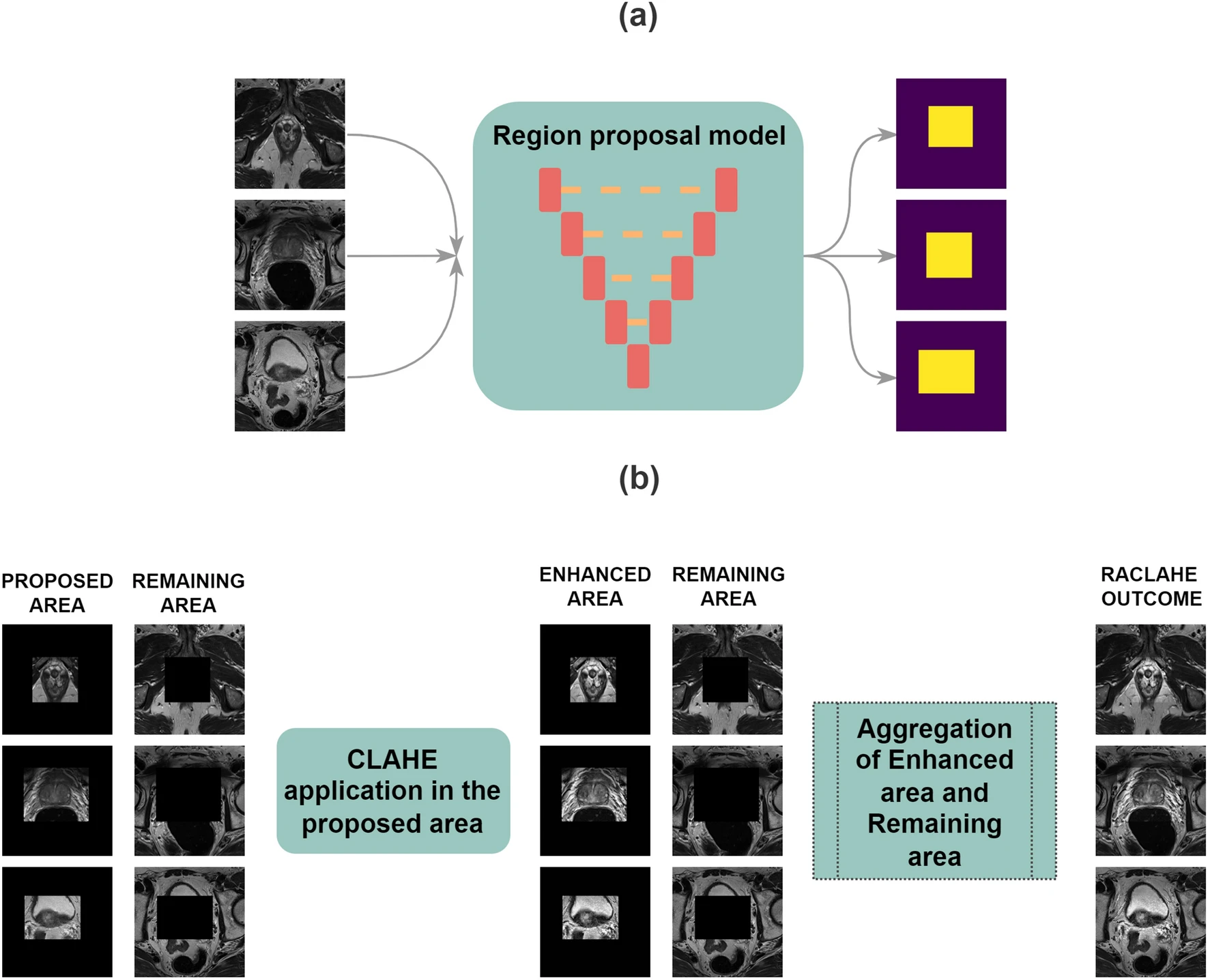
[1] Zaridis, D.I., Mylona, E., Tachos, N. et al. Region-adaptive magnetic resonance image enhancement
Prostate image segmentation
The field of medical imaging has recently witnessed substantial advancements in the application of deep learning techniques, with a particular focus on the segmentation of the prostate gland in magnetic resonance (MR) images. This development is of paramount importance for both diagnostic and therapeutic interventions, especially in the context of managing conditions like prostate cancer. While traditional segmentation algorithms have often yielded inconsistent results, primarily due to the inherent variability and complex structures of the prostate gland, convolutional neural networks (CNNs) have demonstrated exceptional capabilities in this domain. Utilizing large, annotated datasets, CNNs autonomously learn to distinguish features specific to prostate tissue, which translates into markedly improved segmentation performance compared to conventional methods. The intrinsic ability of deep learning algorithms to adaptively capture intricate spatial hierarchies in MR images contributes to their superior efficacy. Ongoing research continues to introduce increasingly sophisticated network architectures and specialized loss functions, which further refines the precision and reliability of prostate gland segmentation in MR imaging.